Hidden Heritage
The Arton Foundation, together with partner institutions Moravská galerie v Brně (Czech Republic, www.moravska-galerie.cz), Technická univerzita v Košiciach (Slovakia, www.fu.tuke.sk), Trance Balance Kft (Hungary, www.acbgaleria.hu), is implementing the multi-year project Hidden Heritage. Online studios of artists from the Visegrad Group countries.
It is an important part of the Arton Foundation's long-term strategy. Many valuable works of art and important source materials created around 1960-1980 are kept by their creators in private apartments and studios, and are thus inaccessible to the public, researchers, and those interested in art. This results in an incomplete picture of postwar art, which we are still dealing with.
As part of the project, we are compiling and digitizing materials from the archives of Janina Wegrzynowska, Lujza Gecser, Jiří Valoch and Milan Adamčiak, among others. The materials will soon be available in the database www.forgottenheritage.eu
The project also allows us to look at the studios of female artists. These places have often played an important cultural role, and are now an important part of European heritage. We are trying to document them and make the collected information available in such a way that it creates a context for the developed archives.
To find out more about the selected archives, please check the links:
Hanna Orzechowska: https://youtu.be/65kgKq-O4Zw
Anna Buczkowska: https://youtu.be/t-9M3PtLbRk
Janina Węgrzynowska: https://youtu.be/HRcKzU56R8A
Lujza Gecser: https://www.youtube.com/watch?v=AZmc_-hAJWk
Katalin Ladlik: https://www.youtube.com/watch?v=RC750-5AUGs&t=98s
Károly Hopp-Halász: http://youtube.com/watch?v=FbTG1tHo4yU&t=9s
Konferencja "Hidden Visegrad Heritage: Artists’ Studios Online"
In the project “Hidden Visegrad Heritage: Artists’ Studios Online”, the Arton Foundation (Poland, www.fundacjaarton.pl) and its institutional partners the Moravian Gallery in Brno (Czechia, www.moravska-galerie.cz), the Technical University of Košice (Slovakia, www.fu.tuke.sk), and acb Gallery (Hungary, www.acbgaleria.hu) invite you to participate in a conference devoted to issues of care for artists’ private archives. The conference will take place as the online event on 24th of October 2024.
Currently, a subject of particular concern of researchers, archivists, and cultural institutions should be materials created and collected by artists born in the 1930s and 1940s. These materials are particularly vulnerable to being scattered or destroyed, as this generation of artists are not always in a position to pass on their artistic legacy to anyone. It should also be pointed out that the most important sources of information on these resources, about the materials and works gathered there, are the artists themselves, who have an almost organic connection to them. If we do not preserve their knowledge, we will lose an invaluable cultural resource.
The English term “estate” does not have an exact equivalent in Polish. Instead, we typically use the less precise term “archive,” which originally did not refer to collections in private hands. This gap in vocabulary suggests that the problem of artistic legacies requires reflection and work—in general, but in Central & Eastern Europe in particular.
Resources of this type have only relatively recently come to be regarded as an important element of the culture. In the “Hidden Visegrad Heritage...” project, we archive materials found in the private hands of the artists or their heirs, digitize them and make them available online, but we also examine the places where they are stored, which we regard as significant points on the cultural map of our region. We also seek to share our experiences in the practice of working with materials of this sort, to develop the best methods of dealing with these objects but also the stories associated with them.
We pose questions about:
• How to effectively secure each resource for the long term
• How to support artists and their heirs in the process of preserving these resources
• How to best document the places where they are stored and take care of them as valuable cultural resources
• How we can develop our own adequate terminology concerning these resources.
The aim of the conference is to share knowledge and practices in this area. We have invited to the conference people who encounter artists’ archives on a daily basis, process them and spread knowledge about them, so that together we can develop a set of best archival practices for the heritage of visual artists.
The event will be held online. To attend, please register at: arton@fundacjaarton.pl
CONFERENCE PROGRAM:
hidden_visegrad_heritage_program.pdf
The conference speaches: https://www.facebook.com/story.php?story_fbid=950919210397383&id=100064379391746&_rdr
The project is co-financed by the Governments of Czechia, Hungary, Poland and Slovakia through Visegrad Grants from International Visegrad Fund. The mission of the fund is to advance ideas for sustainable regional cooperation in Central Europe.
The project's visual identity uses a fragment from a collage by Janina Węgrzynowska
Argentyński eksperyment: CAyC i CSSR
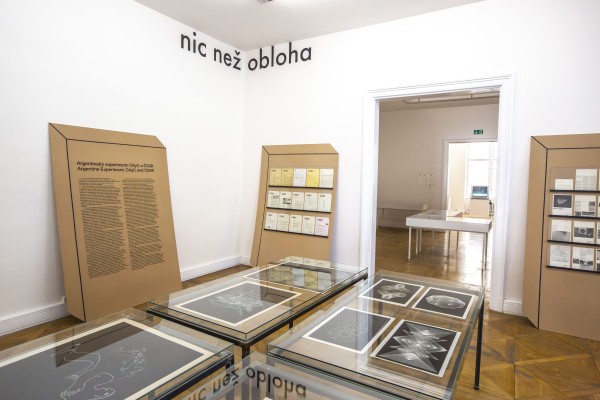
On April 17, 2025, at 6 pm, we invite you to the opening of the exhibition "Argentine Experiment: CAyC and CSSR", which will be held at the Moravian Gallery in Brno (Husova 18, Brno, Czech Republic)
Curators: Ondřej Chrobák, Pavel Kappel, Jana Písaříková
For more information: https://moravska-galerie.cz/vystavy/vystavni-intervence-ve-stale-expozici-argentinsky-experiment-cayc-a-cssr/
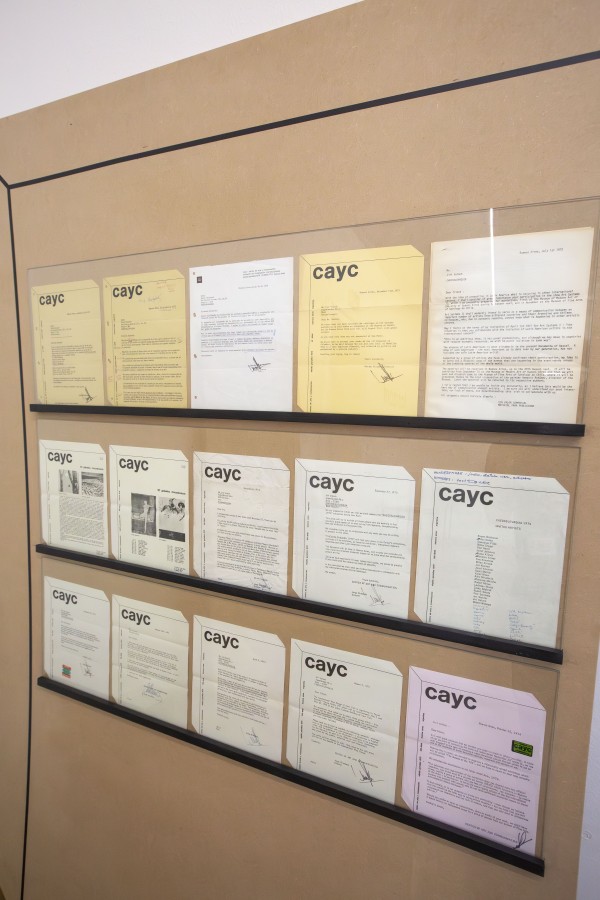
In 1968, artist, theorist and entrepreneur Jorge Glusberg founded the progressive institution Centro de Arte y Comunicación (CAyC) in Buenos Aires. The innovative “geopolitical” aspect of CAyC's activities was the collaboration he undertook not only with entities in the West, but also with Eastern Bloc countries - in particular Czechoslovakia, Hungary and Poland - as well as with “autonomous” Yugoslavia. Jorge Glusberg had an ambitious plan to create an artistic network that would connect Eastern Europe and the global South, and that would counterbalance the dominant narrative of Western art.
In the Czechoslovak context, he made contact with Professor Pavel Štěpánek, a university graduate and assistant at the National Gallery. Glusberg's other contact was Jiří Valoch, whose work in the field of visual poetry was exhibited at international exhibitions of experimental poetry around the world, including Argentina (La Exposición Internacional de Novísima Poesía/69). In 1971, a number of Czechoslovak artists participated in the Arte de Sistemas exhibition, which included not only local Argentine neo-avant-garde artists, but also a related international art community
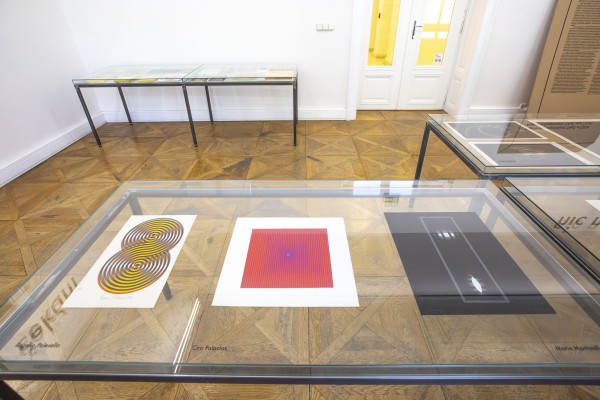
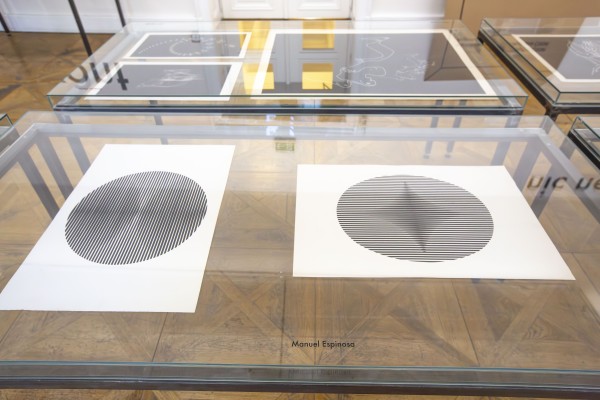
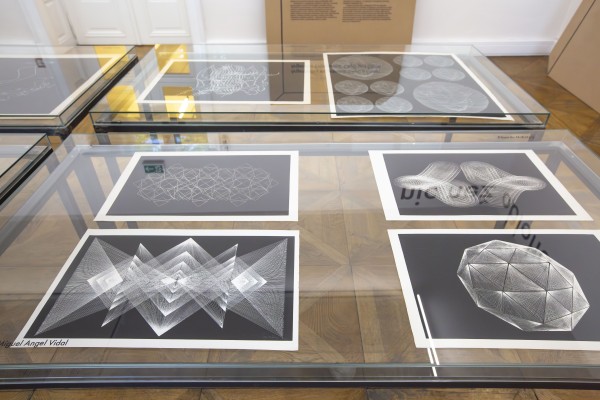
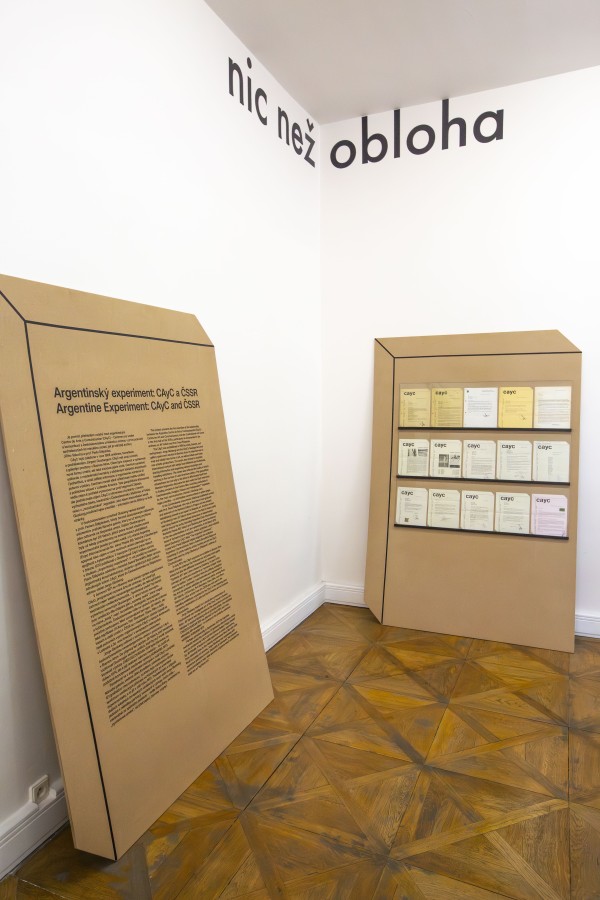
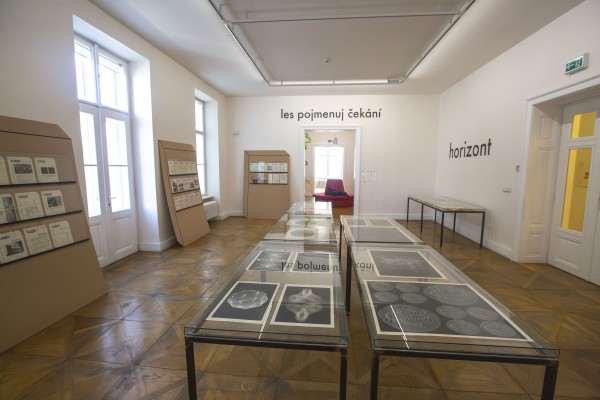
The exhibition will present a collection of graphic folios by Argentine authors working within the CAyC, which were exhibited in 1971 by Prof. Štěpánek in the exhibition “Argentine Constructivism” at the Benedikt Rejt Gallery. There will also be a “symbolic” reconstruction of a Czechoslovakian work for the exhibition "Arte de Sistemas" developed from a collection of materials and artworks related to CAyC. The communication between CAyC and individual and local art scenes is one of the most interesting phenomena in the field of international relations of the post-war art world.
The project is co-financed by the governments of the Czech Republic, Hungary, Poland and Slovakia through Visegrad Grants from the International Visegrad Fund. The fund's mission is to promote the idea of sustainable regional cooperation in Central Europe.
Fot. Argentina experiment: CAyC and ČSSR, curators: Jana Písaříková, Pavel Kappel, Ondřej Chrobák, photo: Martin Cáb, Jiří Valoch's Archive and Collection, Moravian gallery in Brno, 17. 4. - 30. 9. 2025
E-book 'Hidden Heritage: Visegrad Artists' Estates and Archives'
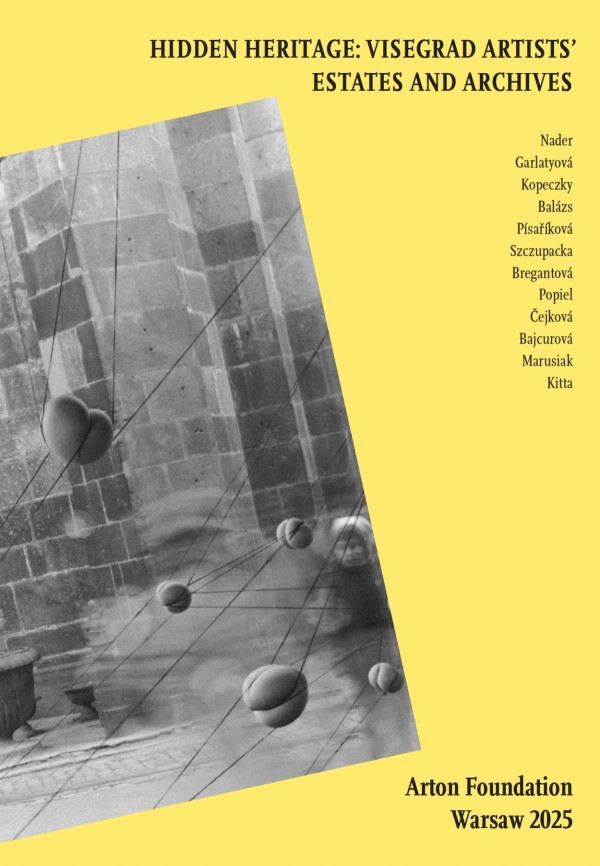
We invite you to read the publication 'Hidden Heritage: Visegrad Artists' Estates and Archives', which was created as part of the Hidden Visegrad Heritage: Artists' Studios On-Line project.
The e-book is one of the outcomes of a conference devoted to the broadly understood issues related to the care of private archives of artists, which took place on October 24, 2024.
The subject of particular concern for researchers, archivists, and cultural institutions should currently be, above all, materials created and collected by artists born in the 1930s and 1940s. These are the most vulnerable to dispersion and destruction, as their creators do not always have the opportunity to pass on their artistic achievements to anyone. It should also be noted that the most important sources of information about these resources, about the materials and works collected in them, are their creators, who are almost organically connected with them. Unless we preserve their knowledge, we will lose a valuable cultural resource.
The English term “estate” has no equivalent in meaning in Polish, for example. Instead, we usually use the imprecise term “archive,” which originally did not refer to a collection in the hands of a private individual. This peculiar terminological gap indicates that the problem of artistic legacies requires consideration and work. It requires it in general, and in Central and Eastern Europe in particular.
It is only relatively recently that such resources have been recognized in our region as an important element of the cultural field. As part of the “Hidden Heritage...” project, we archive materials held by artists or their heirs, digitize them, and make them available online, but we also look at the places where they are stored, seeing them as important points on the cultural map of our region. We also strive to exchange experiences in the field of working with this type of material, develop the best methods of handling the objects, but also the stories associated with them.
In our publications, we try to answer the following questions:
– how to permanently and effectively secure a given resource;
– how to support artists and their heirs in the process of preserving these resources;
– how best to document their storage locations and care for them as valuable cultural resources;
– whether we can develop our own adequate terminology for them.
Authors:
Kata Balázs, Polana Bregantová, Katarína Bajcurová, Markéta Čejková, Gabriela Garlatyová, Richard Kitta, Róna Kopeczky, Tomas Marusiak, Luiza Nader, Jana Písaříková, Agnieszka Popiel, Tomasz Popiel, Wiktoria Szczupacka
Editor: Marika Kuźmicz
Collaboration: Adam Parol
Design and layout: Kacper Greń
Proofreading: Barry Keane
The project is co-financed by the governments of the Czech Republic, Hungary, Poland, and Slovakia through Visegrad Grants from the International Visegrad Fund. The fund's mission is to promote the idea of sustainable regional cooperation in Central Europe.
The e-book is available here:
hidden_heritage_visegrad_artists_2025_spreads.pdf